Description
Quick Summary
Pahalgam is one of Kashmir's most famous mountain destinations, located in the Anantnag district at an altitude of approximately 2,200 metres (7,200 feet). Known for the Lidder River, Betaab Valley, Aru Valley, Baisaran, Chandanwari and the Amarnath Yatra, Pahalgam is a favourite destination for families, honeymoon couples, trekkers, photographers and pilgrims. This guide explains Pahalgam's geography, climate, ecology, culture, sightseeing, travel information and environmental significance.
Last Updated: August 2026
Why Trust This Guide?
This guide has been researched and reviewed by the destination experts at Aabdar Holidays, a trusted Kashmir & Ladakh Destination Management Company (DMC). Our team operates tours to Pahalgam throughout the year, giving us first-hand knowledge of local weather, sightseeing routes, road conditions and travel experiences.
Who Is This Guide For?
- Families planning a Kashmir holiday
- Honeymoon couples
- Nature lovers
- Trekkers and adventure travellers
- Photography enthusiasts
- Pilgrims visiting the Amarnath Yatra
- Students researching Himalayan geography
- Travellers looking for reliable information about Pahalgam
Quick Facts About Pahalgam
| Information | Details |
|---|---|
| Location | Anantnag District, Jammu & Kashmir |
| Altitude | Approx. 2,200 metres (7,200 ft) |
| Distance from Srinagar | Approximately 90 km |
| Main River | Lidder River |
| Best Time to Visit | April to October |
| Nearest Airport | Srinagar International Airport |
| Popular Attractions | Betaab Valley, Aru Valley, Baisaran, Chandanwari, Lidder River |
| Ideal For | Family Trips, Honeymoon, Trekking, Nature & Photography |
What is Pahalgam?
Pahalgam is a picturesque Himalayan hill station situated in the Anantnag district of Jammu & Kashmir. Located along the banks of the Lidder River, it serves as one of the most important tourism, ecological and pilgrimage destinations in Kashmir. Besides being a popular holiday destination, Pahalgam is internationally recognised as the traditional base camp for the annual Amarnath Yatra.
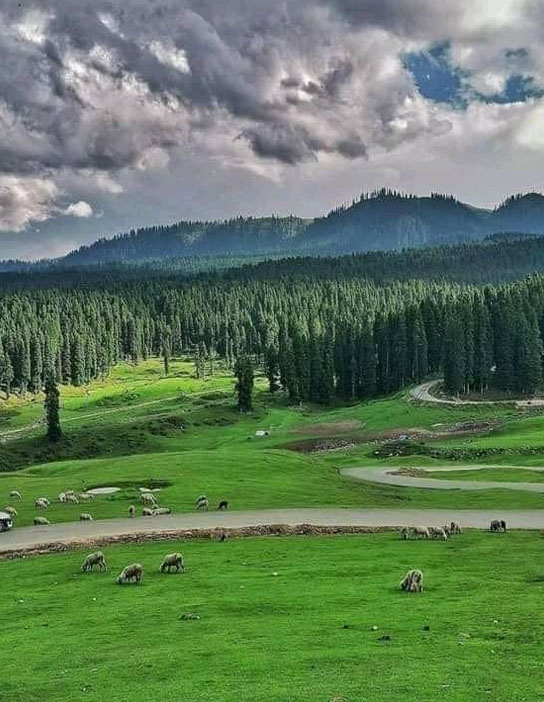
Surrounded by snow-covered mountains, dense pine forests and lush green meadows, Pahalgam represents one of the finest examples of the Western Himalayan mountain ecosystem.
Where is Pahalgam Located?
Pahalgam is situated in the eastern part of the Kashmir Valley within the Anantnag district. The town lies approximately 90 kilometres from Srinagar and forms the gateway to the upper Lidder Valley.
The surrounding region includes alpine meadows, glacial rivers, dense conifer forests and high mountain peaks that gradually rise towards the Greater Himalayas.
- Region: South Kashmir
- District: Anantnag
- Altitude: Approximately 2,200 metres
- River: Lidder River
- Mountain Range: Western Himalayas
Its strategic geographical position makes Pahalgam one of the most environmentally significant valleys in Jammu & Kashmir.
History of Pahalgam
The history of Pahalgam is closely connected with ancient trade routes, traditional shepherd communities and the sacred pilgrimage route to the Amarnath Cave. Historically, the valley served as a seasonal settlement for Gujjar and Bakarwal communities who moved their livestock into the surrounding alpine meadows during summer.
According to local tradition, the name Pahalgam is believed to have originated from the words Pahal (shepherd) and Gam (village), meaning "Village of Shepherds."
During the Dogra period, Pahalgam gradually developed into a mountain retreat because of its cool climate and scenic surroundings. Over the decades, improved road connectivity transformed it into one of Kashmir's leading tourist destinations while preserving much of its natural environment.
Geography and Landscape
Pahalgam lies within the upper catchment of the Lidder River and is surrounded by rugged Himalayan mountains, alpine meadows, pine forests and glacier-fed streams.
The valley has been shaped over thousands of years through glacial movement, river erosion and natural sediment deposition. This geological process has created broad meadows, fertile river terraces and spectacular mountain landscapes.
Unlike many hill stations developed around urban infrastructure, Pahalgam retains its natural mountain character where forests, rivers and alpine ecosystems dominate the landscape.
Climate of Pahalgam
Pahalgam experiences a cool temperate mountain climate throughout the year. Summers remain pleasantly cool, while winters receive heavy snowfall due to the region's elevation.
| Season | Months | Weather |
|---|---|---|
| Spring | March – April | Snow melting and fresh greenery |
| Summer | May – August | Pleasant weather and lush meadows |
| Autumn | September – October | Golden forests and clear skies |
| Winter | November – February | Heavy snowfall and freezing temperatures |
The pleasant summer climate makes Pahalgam one of the most visited destinations in Kashmir between April and October.
Best Time to Visit Pahalgam
The best time depends on the type of experience you are seeking.
- April to June – Green valleys, pleasant weather and sightseeing.
- July to September – Ideal for photography and trekking.
- October – Beautiful autumn colours.
- December to February – Snowfall and winter landscapes.
Each season offers a unique perspective of Pahalgam, making it a year-round destination for nature lovers.
Lidder River – The Lifeline of Pahalgam
The crystal-clear Lidder River flows directly through Pahalgam and is one of the most important glacier-fed rivers in Kashmir. Originating from the Kolahoi Glacier, the river supports agriculture, tourism, local biodiversity and downstream water systems.
Besides its ecological importance, the river has become one of the defining visual attractions of Pahalgam, offering excellent opportunities for riverside walks, trout fishing and landscape photography.
Month-wise Weather in Pahalgam
The weather in Pahalgam changes significantly throughout the year due to its elevation and Himalayan location. Summers are cool and pleasant, while winters bring heavy snowfall that transforms the valley into a winter wonderland. Travellers planning a Kashmir holiday should choose their travel dates according to the experience they want, whether it is lush green meadows, colourful autumn landscapes or snow-covered mountains.
| Month | Average Temperature | Weather Conditions |
|---|---|---|
| January | -7°C to 3°C | Heavy snowfall and freezing temperatures |
| February | -5°C to 5°C | Snow continues with cold mornings |
| March | -1°C to 10°C | Snow begins melting, early spring |
| April | 4°C to 16°C | Fresh greenery and blooming flowers |
| May | 8°C to 20°C | Pleasant sightseeing weather |
| June | 11°C to 24°C | Peak tourist season |
| July | 13°C to 26°C | Comfortable summer climate |
| August | 12°C to 25°C | Green landscapes with occasional showers |
| September | 9°C to 22°C | Excellent mountain visibility |
| October | 4°C to 17°C | Golden autumn colours |
| November | -1°C to 10°C | Cold weather and early snowfall |
| December | -5°C to 5°C | Heavy snowfall begins |
How to Reach Pahalgam
Pahalgam is well connected to Srinagar by road and can easily be reached by air, rail and private transport. Most visitors begin their journey from Srinagar International Airport before travelling through Pampore, Awantipora and Anantnag to reach Pahalgam.
By Air
The nearest airport is Srinagar International Airport, located approximately 95 kilometres away. The drive usually takes around 2.5 to 3 hours depending on traffic and weather.
By Road
The most popular driving route is:
Srinagar → Pampore → Awantipora → Anantnag → Pahalgam
The route passes through saffron fields, apple orchards, villages and scenic mountain roads before reaching the Lidder Valley.
By Train
The nearest railway station is Srinagar Railway Station, while Jammu Tawi serves as the major railway hub for travellers arriving from other parts of India.
Distance from Major Destinations
| Destination | Distance | Travel Time |
|---|---|---|
| Srinagar | 90 km | 2.5 Hours |
| Srinagar Airport | 95 km | 3 Hours |
| Anantnag | 45 km | 1 Hour |
| Gulmarg | 140 km | 4.5 Hours |
| Sonamarg | 170 km | 5 Hours |
| Doodhpathri | 120 km | 4 Hours |
| Yusmarg | 100 km | 3.5 Hours |
Betaab Valley
Betaab Valley is one of the most photographed locations in Kashmir and is situated approximately 15 kilometres from Pahalgam. Named after the Bollywood movie Betaab, the valley is surrounded by snow-covered mountains, dense forests and the sparkling Lidder River.
Its wide green meadows and crystal-clear streams make it one of the most visited sightseeing attractions in Kashmir. During spring and summer, colourful wildflowers cover the valley, while autumn brings golden foliage across the surrounding forests.
Visitors come here for photography, nature walks, family picnics and scenic sightseeing.
Aru Valley
Aru Valley lies around 12 kilometres from Pahalgam and serves as the starting point for several famous Himalayan trekking routes.
The valley is surrounded by alpine meadows, dense forests and snow-capped mountains, offering spectacular scenery throughout the year. It is particularly popular among photographers, trekkers and families looking for peaceful natural surroundings.
During winter, Aru Valley receives heavy snowfall, while summer transforms the region into lush green grasslands ideal for horse riding and leisurely walks.
Baisaran Valley – Mini Switzerland of Kashmir
Baisaran Valley, popularly known as the Mini Switzerland of Kashmir, is located a few kilometres above Pahalgam and can be reached by pony ride or trekking.
The valley features vast rolling meadows surrounded by pine forests and Himalayan peaks. Because vehicles are not allowed inside the meadow, the natural environment has remained largely untouched.
Families often spend several hours here enjoying horse rides, photography and panoramic mountain views.
Chandanwari
Chandanwari is located around 16 kilometres from Pahalgam and is internationally known as the traditional starting point of the annual Amarnath Yatra.
The area remains covered with snow for a significant part of the year and is surrounded by dramatic mountain landscapes and glacier-fed streams.
Besides its religious importance, Chandanwari attracts visitors looking to experience snow during spring and early summer when snow remains visible despite pleasant temperatures in Pahalgam town.
Tulian Lake
Tulian Lake is one of the most beautiful high-altitude alpine lakes near Pahalgam. Situated at an elevation of approximately 3,700 metres above sea level, the lake remains frozen for much of the year.
The trek to Tulian Lake passes through Baisaran and alpine meadows before reaching the glacial lake surrounded by rugged Himalayan peaks.
Because of its altitude and challenging trekking route, Tulian Lake is recommended mainly for experienced trekkers and adventure enthusiasts.
Amarnath Yatra and Pahalgam
Pahalgam serves as the traditional base camp for the annual Amarnath Yatra, one of the most important Hindu pilgrimages in India.
Every year, thousands of pilgrims begin their journey from Pahalgam before travelling through Chandanwari, Sheshnag and Panchtarni to reach the sacred Amarnath Cave.
The pilgrimage has significantly influenced the cultural and economic development of Pahalgam while maintaining the spiritual importance of the region for centuries.
Things to Do in Pahalgam
- Visit Betaab Valley
- Explore Aru Valley
- Ride horses to Baisaran Meadow
- Walk beside the Lidder River
- Visit Chandanwari
- Trek to Tulian Lake
- Go trout fishing
- Photography
- Shopping for Kashmiri handicrafts
- Experience local cuisine
Pahalgam offers activities suitable for families, honeymoon couples, photographers, adventure travellers and pilgrims throughout the year.
Flora and Fauna of Pahalgam
Pahalgam lies within the Western Himalayan temperate forest ecosystem and supports a remarkable variety of plant and animal species. The valley's forests, meadows, rivers and alpine slopes form an important ecological corridor connecting several protected landscapes in Kashmir. Due to its relatively low level of urbanisation, Pahalgam continues to preserve much of its natural biodiversity.
The forests surrounding Pahalgam are dominated by magnificent Deodar Cedar, Blue Pine, Kail, Fir, Spruce and broad-leaved trees such as walnut, willow and poplar. During spring and summer, alpine meadows become covered with colourful wildflowers, medicinal herbs and native grasses that support livestock grazing and wildlife.
The region also provides habitat for numerous Himalayan mammals and bird species including:
- Himalayan Black Bear
- Musk Deer
- Leopard
- Red Fox
- Himalayan Marmot
- Himalayan Monal
- Golden Eagle
- Snow Pigeon
- Numerous migratory birds
The Lidder River also supports cold-water fish species, especially the famous Himalayan trout, making Pahalgam one of India's well-known trout fishing destinations.
Culture and Local Life in Pahalgam
Pahalgam reflects the traditional lifestyle of rural Kashmir. The local population primarily consists of Kashmiri communities along with seasonal Gujjar and Bakarwal tribes who migrate with their livestock to higher alpine pastures during summer.
The culture of the valley revolves around agriculture, livestock farming, handicrafts and tourism. Visitors often experience warm Kashmiri hospitality, traditional wooden architecture and centuries-old customs that continue to define everyday life.
Local residents celebrate major festivals including Eid, Urs celebrations, Navroz and seasonal agricultural festivals. During the Amarnath Yatra, Pahalgam also becomes a centre of religious harmony as local communities actively support pilgrims visiting the holy cave.
Photography in Pahalgam
Pahalgam is regarded as one of the finest photography destinations in Kashmir because of its changing landscapes throughout the seasons.
Popular photography locations include:
- Lidder River
- Betaab Valley
- Aru Valley
- Baisaran Meadow
- Chandanwari
- Tulian Lake
- Pine forests
- Mountain viewpoints
Spring offers blooming flowers, summer provides lush green landscapes, autumn displays colourful forests, while winter transforms the valley into a spectacular snow-covered destination.
Food You Should Try in Pahalgam
Pahalgam offers visitors an opportunity to experience authentic Kashmiri cuisine alongside North Indian and international dishes served in hotels and restaurants.
Some popular local foods include:
- Rogan Josh
- Gushtaba
- Rista
- Yakhni
- Tabak Maaz
- Kashmiri Pulao
- Kahwa
- Noon Chai
- Harissa (winter)
Many restaurants also serve fresh trout sourced from the Lidder River, making it one of the signature dishes of Pahalgam.
Shopping in Pahalgam
The local market of Pahalgam offers a wide selection of Kashmiri handicrafts and souvenirs. Although smaller than Srinagar's markets, visitors can purchase authentic local products directly from artisans and family-owned shops.
Popular shopping items include:
- Pashmina Shawls
- Hand-knotted Carpets
- Papier-mâché Handicrafts
- Walnut Wood Carvings
- Dry Fruits
- Saffron
- Traditional Kashmiri Clothing
- Locally Produced Honey
Accommodation in Pahalgam
Pahalgam offers accommodation suitable for every budget, ranging from luxury resorts to family guest houses and riverside cottages.
| Category | Suitable For |
|---|---|
| Luxury Resorts | Luxury holidays & honeymoon couples |
| Premium Hotels | Families & corporate travellers |
| Budget Hotels | Budget-conscious tourists |
| Guest Houses | Backpackers & solo travellers |
| Homestays | Local cultural experiences |
Pahalgam vs Gulmarg – Which Destination Should You Choose?
| Feature | Pahalgam | Gulmarg |
|---|---|---|
| Main Attraction | Valleys & Lidder River | Skiing & Gondola |
| Best For | Nature & Family Holidays | Snow Activities |
| Adventure | Trekking & Fishing | Skiing & Snowboarding |
| Crowd Level | Moderate | High During Winter |
| Landscape | Forests & Rivers | Open Meadows & Ski Slopes |
If you enjoy rivers, forests, peaceful scenery and family-friendly experiences, Pahalgam is an excellent choice. If your priority is skiing, cable cars and heavy snowfall activities, Gulmarg may be more suitable. Many visitors include both destinations in their Kashmir itinerary.
Travel Tips Before Visiting Pahalgam
- Carry warm clothing even during summer evenings.
- Book hotels in advance during peak tourist season.
- Start sightseeing early to avoid traffic.
- Wear comfortable walking shoes.
- Respect local customs and religious sites.
- Do not litter forests or rivers.
- Keep sufficient cash for small purchases.
- Follow weather updates during winter.
- Hire registered local guides for trekking routes.
- Choose authorised taxi operators for sightseeing.
Our Local Experience
At Aabdar Holidays, we organise Pahalgam tours throughout the year for families, honeymoon couples, corporate groups and international travellers. Based on our team's regular visits, we recommend starting sightseeing early in the morning to enjoy peaceful surroundings, avoid traffic and capture the best mountain views. Spring offers colourful landscapes, summer provides lush greenery, autumn displays golden forests, while winter transforms the valley into a snowy paradise.
Sources & References
- Department of Tourism, Jammu & Kashmir
- India Meteorological Department (IMD)
- Forest Department, Jammu & Kashmir
- Geological Survey of India
- Wildlife Protection Department, Jammu & Kashmir
- Local destination research by Aabdar Holidays
- First-hand field observations by our travel experts
About the Author
Aabdar Holidays Editorial Team
This destination guide has been researched, written and reviewed by the travel specialists at Aabdar Holidays, a trusted Kashmir & Ladakh Destination Management Company. Our editorial team regularly visits Pahalgam to provide accurate travel information, destination updates and practical insights based on real on-ground experience.
Reviewed: August 2026
Editor's Note
Road conditions, weather, snowfall, tourist facilities and government regulations may change throughout the year. This guide is reviewed periodically to provide updated destination information and reliable travel advice for visitors planning a trip to Pahalgam.
Key Takeaway
Pahalgam is one of Kashmir's most beautiful mountain destinations, offering spectacular valleys, pristine rivers, alpine forests, adventure activities, wildlife, cultural heritage and spiritual significance. Whether you are planning a honeymoon, family holiday, photography tour, trekking adventure or the Amarnath Yatra, Pahalgam provides unforgettable experiences throughout every season of the year.
Plan Your Pahalgam Trip with Aabdar Holidays
Looking for a professionally planned Kashmir holiday? Aabdar Holidays offers customised Pahalgam tour packages including hotels, houseboats, sightseeing, airport transfers, private cabs and complete Kashmir itineraries for families, honeymoon couples, corporate groups and international travellers. Contact our destination experts to plan a hassle-free holiday with local assistance throughout your trip.
Photo